
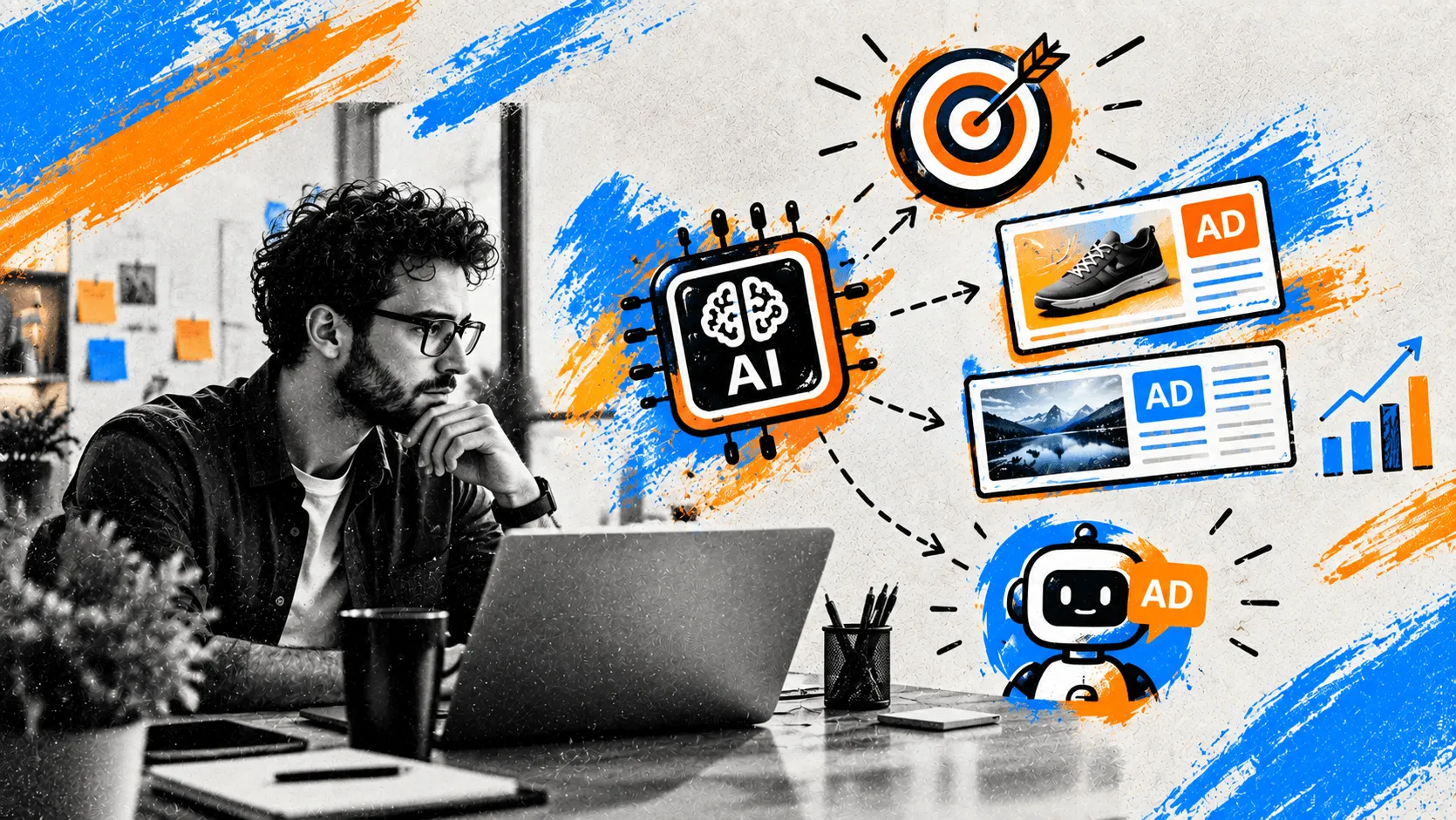
ChatGPT Ads are changing the world of digital advertising. Find out how advertising in ChatGPT works, what opportunities it offers businesses and what challenges it brings for users and advertisers.
ChatGPT Ads: A new chapter in digital marketing
The introduction of advertising in AI applications creates a new advertising environment: ChatGPT Ads. It gives businesses the chance to reach potential customers in an entirely new context, right where they ask questions, look for solutions and seek advice.
We have been working with the possibilities of ChatGPT Ads from day one. We put this know-how to work for our clients: we plan and run campaigns and support them on an ongoing basis, to make the best possible use of ChatGPT’s potential.
What are ChatGPT Ads?
ChatGPT Ads are advertisements displayed within the ChatGPT platform. Unlike classic search engine ads, which are often aimed at specific search terms, advertising in an AI chat can be embedded in a conversational context.
What sets it apart is the way people interact: users put their questions in natural language and receive answers tailored to them. In this setting, advertising can play a supplementary role, for example by drawing attention to suitable products, services or offers.
A clear distinction matters here: advertising is not the same as an AI-generated answer. Ads should be recognizable as such and work independently of the factual answer given by the AI system.
How does advertising in ChatGPT work?
The idea behind ChatGPT Ads rests on combining context-based communication with digital advertising.
A user asks ChatGPT for ideas for a short mountain getaway. Alongside the actual answer, a clearly labeled ad from a travel provider whose offer fits the topic could appear.
Another example would be a question about suitable running shoes. In that case, an ad from a sporting goods retailer could point to matching products.
Several factors play a role here:
- Context: The topic of the conversation can decide how relevant an ad is.
- Interests: Depending on the advertising model, general interests or other permitted signals may be taken into account.
- Transparency: Users should be able to tell whether something is an ad or an independent answer.
- Data protection: How conversation content and personal data are handled is an essential part of ad design.
Which of these options are actually put into practice depends on the specific advertising policies and technical conditions.
What opportunities do ChatGPT Ads offer businesses?
Advertising in AI applications could open up new ways for businesses to reach their target groups.
1. Advertising in the right context
Classic online advertising is often based on search terms, browsing behavior or demographic characteristics. AI-based ad formats could link more closely to specific questions and information needs.
This allows businesses to present their offers in an environment where users are already actively looking for information.
2. New ways of approaching customers
ChatGPT is used for many tasks, from product research to travel planning. Businesses could use this variety to make their services and products visible in a range of topic areas.
The combination of information, advice and product discovery is particularly interesting.
3. Potential for more targeted outreach
Context-based advertising can help tailor ads more closely to the situation at hand. However, this does not automatically mean that every ad is more relevant or delivers better results.
How successful such ad formats really are has to be examined using actual campaign data.
4. A complement to existing marketing channels
In the long term, ChatGPT Ads could complement existing digital advertising channels such as search engine marketing, social media advertising and display advertising.
For businesses, the question is therefore how AI-based ad formats can be sensibly integrated into an overall marketing strategy.
What challenges are there?
Alongside the opportunities, there are important aspects businesses should consider.
- Data protection: Personal information from conversations must be protected.
- User trust: Advertising should be clearly separated from independent AI answers.
- Measurability: Metrics such as click-through rate, conversion rate and cost per conversion help with monitoring success.
- Legal requirements: Ad labeling and data protection must comply with the applicable regulations.
Transparency and a responsible approach to data are decisive for the acceptance of such ad formats.
How can businesses prepare for ChatGPT Ads?
Even without using new ad formats right away, businesses can lay some groundwork.
- Improve your own digital visibility: High-quality content, clear product information and a technically well-structured website remain important parts of a digital marketing strategy.
- Understand your target group: Businesses should know which questions their customers ask, which problems they want to solve and which information matters for their purchase decisions.
- Follow developments: New ad formats, available features and terms of use can change. It is worth checking official information regularly.
- Take data protection and transparency into account: Advertising activities should be built on transparent and privacy-compliant foundations from the start.
- Plan marketing measures holistically: AI-based ad formats should not be viewed in isolation but as a possible part of a comprehensive digital strategy.
Together towards more digital success for your business
As an agency, we support you in using the opportunities of ChatGPT Ads and AI-powered marketing for your business. We know the developments in digital marketing and help you find the right measures for your goals.